
Waste in
Food, farm and forestry residues: mixed organic waste of the kind anaerobic digestion plants already take in. No crops grown for fuel, so no competition with food, land or water.
Source: Dealroom, Oct 2026; Founders at Cambridge, Oct 2025
A nature-inspired anaerobic digestion process, upgraded with synthetic biology and AI-driven bioprocess design, that converts multiple waste streams into fatty acids for drop-in jet fuel.
An illustration built from Neela's published description. It shows the principle, not a specific plant.
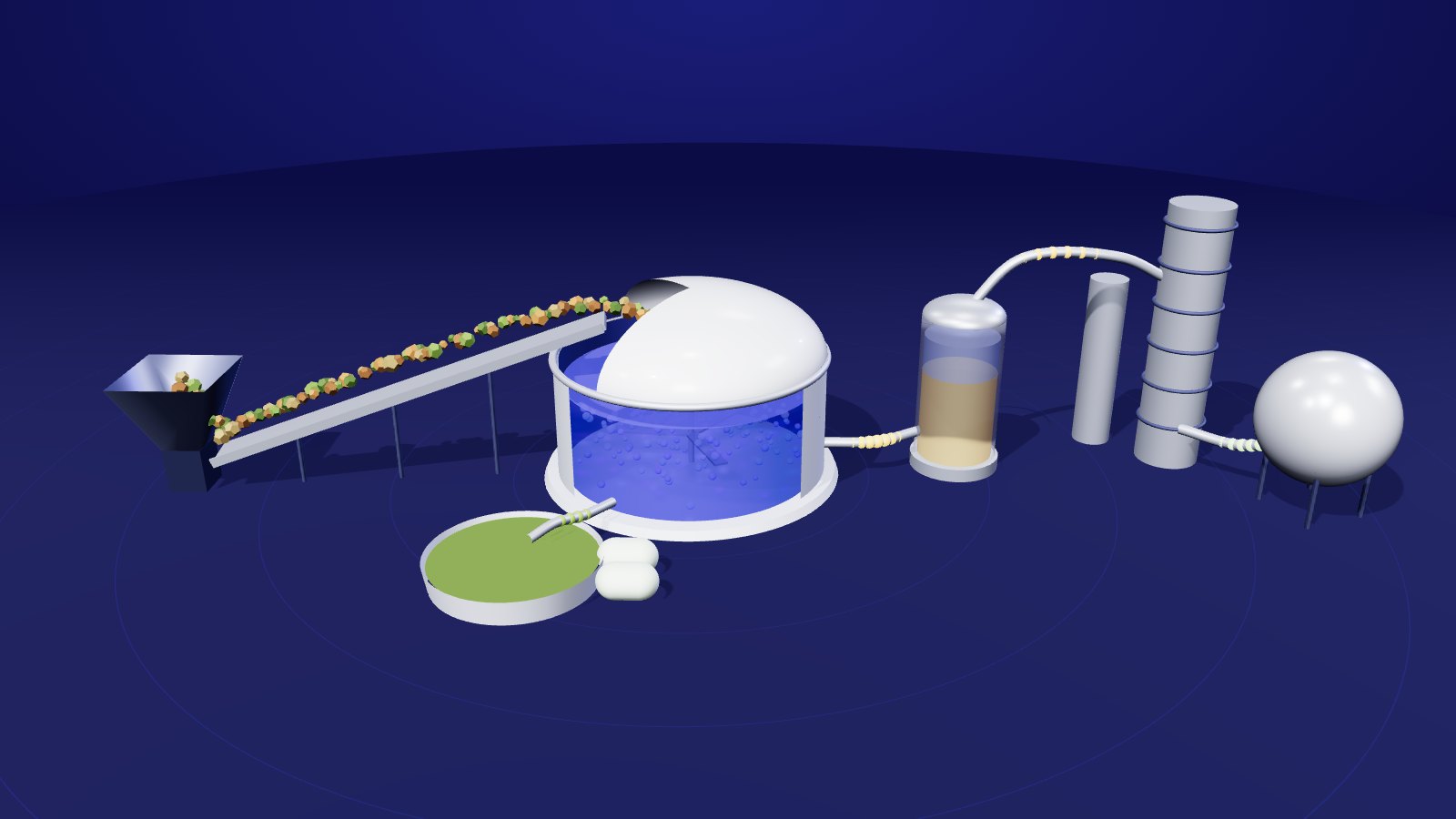
Food, farm and forestry residues: mixed organic waste of the kind anaerobic digestion plants already take in. No crops grown for fuel, so no competition with food, land or water.
Source: Dealroom, Oct 2026; Founders at Cambridge, Oct 2025Food, farm and forestry residues: mixed organic waste of the kind anaerobic digestion plants already take in. No crops grown for fuel, so no competition with food, land or water.
Source: Dealroom, Oct 2026; Founders at Cambridge, Oct 2025Inside an existing biogas digester, an AI-designed synthetic microbial community breaks the waste down. Neela builds on anaerobic digestion, a century-old process already running at scale in European biogas plants.
Source: neelabiotech.com; Dealroom, Oct 2026The process is steered towards fatty acids, the precursor for HEFA-based sustainable aviation fuel, so SAF production relies less on scarce waste cooking oils.
Source: Dealroom, Oct 2026What remains, digestate and bio-chemicals, has applications in fertiliser, industrial chemicals, coatings, bioplastics and animal nutrition.
Source: University of Cambridge, Dept. of EngineeringThe fatty acids feed HEFA refining using existing refinery infrastructure. The result is a drop-in fuel that works with existing aircraft and airport infrastructure.
Source: neelabiotech.com; Founders at CambridgeGrant funding from the Henry Royce Institute for a five-month feasibility study of carbon-negative fatty acid production, run with the Aviation Impact Accelerator at the Whittle Laboratory, which assesses techno-economics and lifecycle emissions.
The October 2026 pre-seed round funds the move from lab to a pilot-scale trial at a biogas plant over the next two years.
Through the IAG Innovation Accelerator the team works on fuel supply chains and certification.
Innovate UK and the Henry Royce Institute have supported the work with grants.
“Our CMU process tackles these barriers by using diverse feedstocks, replacing energy-intensive processes with low-cost microbial action.”
Dr Deepanshu Singh, co-founder & CEO